

The Best Wood for Dining Tables: A Guide to Sustainable Hardwoods

A table isn't just a piece of furniture; it’s the centerpiece of the home. It’s where morning coffees are sipped, family dinners unfold, late-night conversations linger, and remote work gets done. Because a dining or coffee table endures daily life, selecting the right wood species is one of the most important decisions you’ll make when investing in custom furniture.
At Alabama Sawyer, we craft our tables from salvaged urban hardwoods—trees from local neighborhoods and municipal removals in Alabama and the Southeast that are saved from landfills and given a second life.
Here is our insider guide to the absolute best woods for tables, balancing durability, aesthetic character, and sustainability.
What Makes a Great Table Wood?
Before diving into specific species, it helps to know what qualities make a wood ideal for table craftsmanship:
-
Hardness & Density: Dining tops take the brunt of spilled drinks, warm plates, and daily activity. Hardwoods resist dents, scratches, and wear far better than softwoods.
-
Dimensional Stability: Wood naturally expands and contracts with changes in humidity. A stable wood holds its shape over decades without severe warping or twisting.
-
Grain & Visual Character: Every tree has a story written in its grain. The best table species feature compelling figure, color depth, and unique natural movement.

Our Top 4 Hardwoods for Dining & Coffee Tables
1. Walnut: Modern Elegance & Warmth
Best For: Modern interiors, rich dark accents, and statement dining tables.
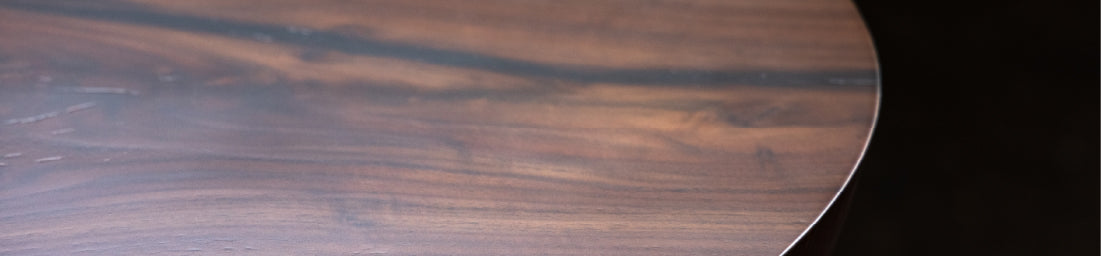
American Black Walnut is widely considered the crown jewel of domestic hardwoods. It features rich, chocolatey brown tones naturally flecked with lighter sapwood swirls and deep auburn undertones.
-
Why we love it: Walnut is strong without being excessively heavy, polishes to a smooth finish, and ages into a warm patina over time.
-
Styling tip: Paired with modern lines or steel legs, an urban walnut slab table creates an effortless blend of refined luxury and organic warmth.

2. White Oak: Timeless Strength & Modern Neutrality
Best For: Minimalist spaces, Scandinavian or coastal decor, and heavy daily use.
White Oak has experienced a massive resurgence in contemporary interior design—and for good reason. Known for its light tan-to-biscuit tones, tight grain, and natural water resistance, White Oak is virtually indestructible.
-
Why we love it: White Oak's cellular structure makes it naturally decay-resistant and exceptionally dense. When quarter-sawn, it reveals striking "ray fleck" grain patterns that add subtle depth.
-
Styling tip: A clear or light-matte finish showcases White Oak’s natural neutral palette, making it easy to pair with almost any color scheme or chair style.
3. Southern Pecan: Bold Character & Peak Hardness
Best For: Statement pieces, rustic-modern homes, and families who need ultimate durability.
A member of the hickory family native to the South, Pecan is one of the hardest domestic woods available in North America. It displays dramatic contrasts between dark heartwood and creamy sapwood, often featuring wild grain lines and rich reddish-gold hues.
-
Why we love it: Pecan handles heavy wear and tear with ease. Because urban
-
pecan trees often grow in open neighborhood spaces, they develop remarkable visual character, knots, and grain figure that you won't find in commercial lumber.
-
Styling tip: A live-edge Southern Pecan table serves as a captivating conversation starter in open-concept dining rooms.

4. Red Oak: Classic Warmth & High Shock Resistance
Best For: Warm, inviting dining areas and family-first spaces.
Red Oak offers incredible durability with a distinct, open grain pattern and a warm reddish-brown undertone. It’s a workhorse hardwood that takes finishes beautifully while absorbing daily impact seamlessly.
-
Why we love it: Red Oak’s strong grain pattern is forgiving when it comes to minor everyday scratches. Sourced from local urban forests, our red oak pieces celebrate the history of Southern shade trees.
-
Styling tip: Red Oak looks stunning in handcrafted trestle tables or farmhouse-inspired silhouettes.

Comparison at a Glance
| Wood Species | Hardness / Durability | Natural Color Profile | Best Aesthetic Match |
| Walnut | High | Deep chocolate brown to warm espresso | Modern, Mid-Century, Refined |
| White Oak | Extremely High | Soft tan, light wheat, neutral gray-brown | Minimalist, Japandi, Coastal, Contemporary |
| Southern Pecan | Ultra High (Hickory family) | Creamy blonde mixed with dark reddish-brown | Rustic-Modern, Eclectic, Statement Slabs |
| Red Oak | High | Warm amber with subtle reddish cast | Classic, Farmhouse, Warm Traditional |
The Urban Wood Advantage: Beauty with a Purpose
When you choose a table made from urban wood, you aren't just selecting a species—you are choosing a material with a story.
"Urban wood fulfills the same structural needs as traditional lumber, but it comes from fallen or removed municipal trees that would otherwise end up chipped or in a landfill. Sourcing urban timber keeps carbon sequestered, reduces environmental impact, and gives local trees a second life in your home."
Because urban trees grow in open environments rather than dense industrial forests, they often develop unique grain swirls, bark inclusions, and warm variations that make each table genuinely one-of-a-kind.

Ready to Design Your Custom Table?
Whether you're drawn to the dark elegance of Walnut, the clean durability of White Oak, or the bold character of Southern Pecan, the best wood for your table depends on how you live and the story you want your home to tell.
Explore our collection of handcrafted dining, coffee, and conference tables—all built in our Birmingham, Alabama shop using locally salvaged urban timber.


